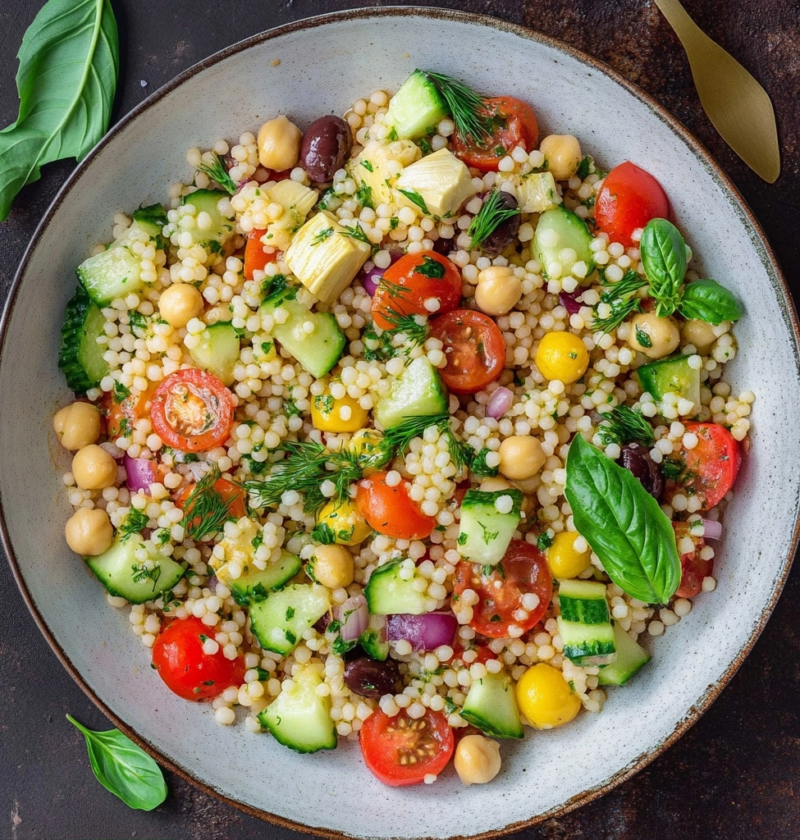
Mediterranean Couscous Salad offers a refreshing combination of toasted pearl couscous and crisp vegetables that define a perfect lunch or light dinner. This dish delivers bright flavors from a zesty lemon dressing and herbal freshness from basil and dill. You get a meal that is quick to assemble, packed with protein from chickpeas, and full of texture from crunchy cucumbers and plump tomatoes. It is an ideal choice for warm weather gatherings or busy week nights when you need something nourishing yet simple to prepare.
| Detail | Information |
|---|---|
| Prep Time | 15 minutes |
| Cook Time | 30 minutes |
| Total Time | 45 minutes |
| Servings | 6 to 8 |
| Difficulty | Easy |
| Cuisine | Mediterranean |
| Category | Salads |
| Method | Boiling and Tossing |
Why This Recipe Works
This Mediterranean Couscous Salad works exceptionally well because of the toasted pearl couscous method that adds a nutty depth you do not find in standard preparations. Using boiling water to cook the pasta ensures it stays perfectly tender without becoming mushy or losing its structure. The lemon dill dressing balances the richness of the olive oil with bright acidity that cuts through the creamy feta or mozzarella. Fresh herbs and crunchy vegetables provide a textural contrast that keeps every forkful interesting and exciting.
I love this recipe for its versatility, as it remains stable even when made hours before serving time. The flavors often improve overnight as the couscous absorbs the vibrant dressing and allows the basil and olive flavors to meld together. It is also incredibly forgiving regarding the specific vegetables you choose to add or leave out based on what is in your kitchen or market. This ensures you can replicate the dish seasonally without being tied to strict ingredients for success.
Another reason this meal succeeds is the protein content from the chickpeas and the heartiness of the artichoke hearts. You do not need a heavy main protein to feel full, making this a satisfying option for vegetarians or light eaters. The cooking process for the pearl couscous creates a chewy bite that prevents the salad from feeling like a standard grain side dish. It sits confidently as a centerpiece of the table while remaining easy to scale up for large crowds or down for a quick family meal.
The balance of salty, acidic, and savory elements creates a profile that complements grilled meats or can stand alone for a plant-based meal. I find the dill adds a fresh anise-like note that pairs perfectly with the tangy lemon juice and the earthiness of the olives. Every component is chosen to enhance the others without competing for dominance, ensuring a harmonious flavor experience. This consistency is why it remains a staple in my weekly meal rotation for its reliable quality and taste.
Chef Tips for Perfect Results
To achieve the best texture and flavor profile, you must pay close attention to toasting the couscous and cooling it before mixing with other ingredients.
- Toast the couscous well: Stirring the couscous in oil until golden ensures a nutty flavor and a firmer texture that resists sogginess.
- Use boiling water: Pouring boiling water directly onto the pasta helps it cook evenly and prevents uneven texture from lukewarm liquid.
- Rinse pasta after draining: While usually unnecessary for couscous, cooling it quickly under cold water stops the cooking and keeps the grains separate.
- Balance the dressing pH: Add lemon juice drop by drop once it is combined with oil to ensure proper emulsification and flavor distribution.
- Chop vegetables uniformly: Cutting the cucumber, tomatoes, and onions into similar sizes ensures each bite has a balanced ratio of ingredients.
- Season the water: Salting the water used to cook the couscous helps season the pasta itself from the inside out during the simmer.
- Use fresh herbs: Fresh basil and dill offer a vibrant aroma that dried herbs cannot fully replicate in this fresh salad style.
- Drain artichokes thoroughly: Excess marinade oil from the canned artichokes can throw off the dressing ratio if you do not rinse and drain them well.
Common Mistakes to Avoid
Beginners often struggle with achieving the right texture or balance, but understanding these common pitfalls will prevent errors during preparation.
| Mistake | Why It Happens | How to Fix It |
|---|---|---|
| Poor Toasting | Skipping the step of browning the couscous in oil leads to a bland and soft texture. | Stir the couscous constantly over medium heat until it turns golden before adding water. |
| Mushy Pasta | Overcooking the couscous or leaving it in the pot after boiling makes it turn into mush. | Follow package timing strictly and drain the water immediately to prevent further cooking. |
| Watered Down Dressing | Using cold or room temperature water can dilute the lemon and oil base significantly. | Make the dressing with full flavor and ensure water is added to the pasta, not the dressing. |
| Dry Ingredients | Not adding enough olive oil to the dressing or not mixing it enough leaves the salad dry. | Whisk the dressing vigorously to emulsify and toss the salad thoroughly to coat every grain. |
| Lukewarm Salad | Serving the dish while the couscous is still hot melts the cheese and wilts the greens too quickly. | Let the cooked couscous cool to room temperature completely before adding fresh herbs and cheese. |
| Salty Taste | Canned olives and artichokes are often high in sodium, which accumulates when mixed together. | Use low-sodium canned goods or rinse them thoroughly to reduce the salt content before serving. |
Variations and Substitutions
Making small adjustments allows this salad to fit various dietary needs or flavor preferences while maintaining its core identity.
| Ingredient or Element | Substitution or Variation | Impact on Flavor or Texture |
|---|---|---|
| Pearl Couscous | Use quinoa or brown rice | Quinoa adds a nutty crunch while rice is softer and less uniform in bite. |
| Chickpeas | Use white beans or kidney beans | White beans are milder in flavor but maintain a soft creamy texture. |
| Mozzarella | Use feta or goat cheese | Feta adds a sharper tang and crumbier texture compared to soft mozzarella. |
| Fresh Basil | Use dried basil or oregano | Dried herbs are less aromatic but provide a savory note if fresh is unavailable. |
| Lemon Juice | Use red wine vinegar or lime | Vinegar adds more acidity while lime changes the overall fruit profile slightly. |
| Olive Oil | Use avocado or grapeseed oil | Avocado oil is richer while grapeseed is lighter with less distinct flavor. |
| Kalamata Olives | Use green olives or no olives | Green olives are saltier and crunchier without the deep brine of Kalamata. |
| Artichoke Hearts | Use roasted red peppers | Paprika and peppers add sweetness and a different chewy texture to the mix. |
Serving Suggestions and Pairings
This salad pairs exceptionally well with grilled proteins or can serve as the main dish for a lunch party.
- Slice grilled chicken breast and place it directly on top of the salad for a protein boost.
- Toss the salad with cooked shrimp seasoned with garlic and lemon zest for a seafood lunch.
- Pair the dish with warm pita bread or crusty Italian bread to soak up the extra dressing.
- Drink a cold glass of sparkling water with a twist of lemon to complement the acidity of the salad.
- Offer a side of tzatziki or garlic dip to add a creamy texture and cooling contrast.
- Top the salad with toasted pine nuts or sliced almonds for added crunch and richness.
- Combine the salad with a Greek yogurt dip for a creamier Mediterranean-style meal option.
- Pair the dish with a chilled Riesling or sparkling white wine for an outdoor dinner.
- Serve the salad in hollowed-out avocado halves for a low-carb presentation option.
- Add roasted eggplant slices to the bowl for a heartier version of the meal.
- Create a wrap using the salad inside a large lettuce leaf or whole wheat tortilla.
- Use the salad as a base for a grain bowl, adding quinoa on the side for extra volume.
For a complete meal idea, I recommend grilling marinated lamb kebabs and serving them alongside this salad. The sweetness of the meat pairs beautifully with the acidity of the lemon and the crunch of the fresh vegetables in the salad.
Make Ahead Options
Yes, you can prepare parts of this salad up to 24 hours in advance without compromising its quality or texture. Prepare the dressing and store it separately or toss all ingredients together except the cheese and basil for better freshness. I recommend keeping the cooked couscous and chopped vegetables in airtight containers in the refrigerator to maintain hydration and crunch. Add the fresh herbs and cheese just before serving to prevent wilting and melting from the acidity and cold.
Storing the salad for two days is also a viable option provided you keep it well-sealed to prevent it from absorbing refrigerator odors. The flavors will continue to develop overnight as the ingredients interact with the lemon juice and olive oil. Just check the texture before serving as the couscous may absorb more liquid over time and require a splash of fresh oil or water.
If you plan to make this several days ahead, it is best to leave the dressing separate and combine everything only on the day you eat. This ensures the salad retains its original texture and does not become overly saturated from the marinade. I have found that this method keeps the ingredients distinct and the flavors vibrant right up until the moment of consumption.
Storage and Reheating
Proper storage is essential to maintain the safety and quality of the ingredients, especially the fresh herbs and dairy elements.
| Method | Duration | Instructions |
|---|---|---|
| Room Temperature | 2 hours max | Keep the salad covered to prevent contamination and bacterial growth. |
| Refrigerator | 3 to 4 days | Store in an airtight container with a layer of plastic wrap pressed against the surface. |
| Freezer | Not recommended | Couscous and fresh vegetables do not freeze well and may become mushy upon thawing. |
| Reheating | Do not reheat | Allow the salad to come to room temperature or serve cold as intended for fresh flavor. |
| Make Ahead | 24 hours | Combine ingredients and store cold, adding cheese and herbs before serving. |
Nutritional Information
Approximate values are based on one serving and may vary depending on exact ingredients and portion size.
| Nutrient | Amount per Serving |
|---|---|
| Calories | 350 kcal |
| Protein | 10 g |
| Fat | 18 g |
| Saturated Fat | 4 g |
| Carbohydrates | 45 g |
| Fiber | 6 g |
| Sugar | 5 g |
| Sodium | 580 mg |
Frequently Asked Questions
Can I make this recipe ahead of time?
Yes, you can prepare this salad entirely a day before serving if you store the cheese and fresh herbs separately. Adding the dairy and herbs just before eating ensures the salad does not lose texture or flavor intensity. You can keep the couscous and vegetables mixed together to allow the flavors to meld overnight.
How do I know when the couscous is cooked?
The couscous is done when it has absorbed all the water and the grains are tender but not mushy to the bite. Taste a few grains to confirm they are cooked through before moving to the cooling step. It usually takes about 25 to 30 minutes for pearl couscous to cook fully if toasted first.
What can I do if the salad is too dry?
You can stir in extra olive oil and a splash of lemon juice to moisten the grains and coat the vegetables evenly. If the couscous has absorbed all the liquid, a small amount of warm water mixed with oil can revive the moisture balance. Always taste the salad before adding more oil to ensure it is not bland.
Is Mediterranean Couscous Salad healthy for me?
A standard Mediterranean Couscous Salad is packed with fiber and healthy fats from olive oil and nuts which supports heart health. The protein from chickpeas and vegetables provides essential nutrients while keeping the meal relatively light and easy to digest. Adding the optional cheese increases calcium intake further for a more balanced meal.
What is the best way to serve this salad?
Serving the salad chilled is the standard method to highlight the fresh flavors of the vegetables and herbs. You can arrange the salad in a wide bowl and garnish with extra lemon zest and fresh basil leaves before serving. Spooning the salad onto a plate alongside a protein ensures a balanced composition for dinner.
Can I freeze the leftover salad for later?
Freezing is generally not recommended for this salad as the vegetables and parsley will become watery and lose crunch upon thawing. The best method to store leftovers is in the refrigerator for up to three days to preserve quality and taste. Avoid freezing dairy cheese if possible to prevent texture changes that make it crumbly and less appealing.
Conclusion
This dish is guaranteed to become a favorite for anyone looking for a fresh and flavorful option that requires minimal effort. The combination of toasted grains with zesty dressing makes this Mediterranean Couscous Salad a standout meal for any occasion. I encourage you to prepare this salad for a potluck or weeknight dinner to enjoy its bright and satisfying qualities. Remember to savor the balance of herbs and acidity that makes this dish so comforting and delicious.
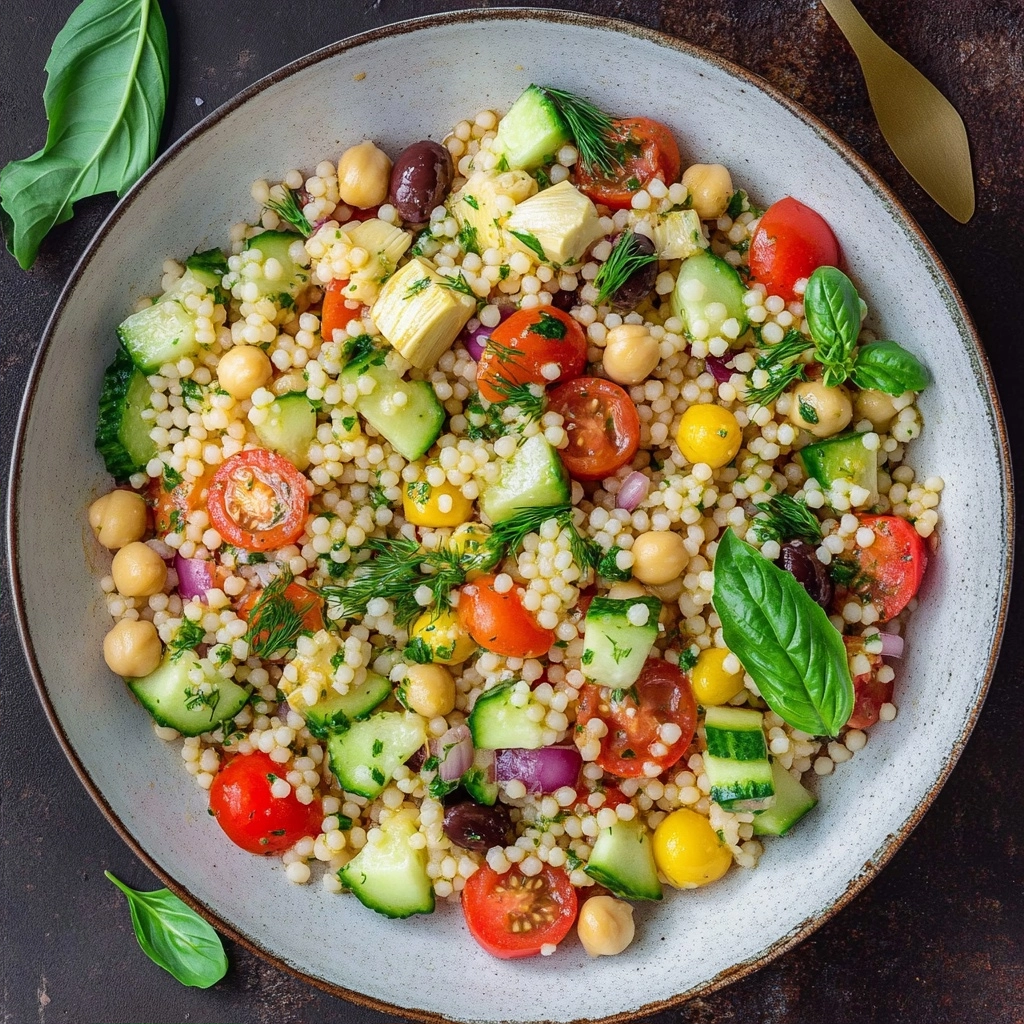
Mediterranean Couscous Salad with Lemon Dill Dressing
Ingredients
Method
- Toast couscous in a skillet over medium heat until golden, 5-7 minutes
- Boil in salted water for 12-15 minutes until tender, drain, and cool
- Combine cooked couscous, chickpeas, artichokes, cucumber, and tomatoes in a large bowl
- Whisk olive oil, lemon zest, lemon juice, garlic, half the basil, and dill in a separate bowl
- Pour dressing over salad and toss gently
- Top with cheese and remaining herbs before serving
Nutrition
Notes
Freeze pre-cooked vegetables for long-term storage
Omit cheese for vegan version
Substitute couscous with quinoa for a gluten-free option