Caprese Salad is a classic Italian dish that combines ripe tomatoes, fresh mozzarella, and basil leaves for a refreshing culinary experience. This simple plate focuses on high quality ingredients to deliver maximum flavor with minimal effort. You will enjoy a bright, summery meal that highlights the natural sweetness of vine-ripened produce paired with creamy cheese. The dish is perfect for any casual gathering or a quick, healthy lunch option during warm weather.
| Detail | Information |
|---|---|
| Prep Time | 10 minutes |
| Cook Time | 0 minutes |
| Total Time | 10 minutes |
| Servings | 4 servings |
| Difficulty | Easy |
| Cuisine | Italian |
| Category | Appetizer |
| Method | No Cook |
Why This Recipe Works
This recipe works because it relies on the quality of ingredients rather than complex cooking techniques. The harmony of flavors comes from the perfect balance between acidic tomatoes, rich cheese, and aromatic herbs. It requires minimal preparation time, allowing you to serve a sophisticated dish in under fifteen minutes. The presentation is visually striking, appealing to the eye before the first bite is even taken.
Using the finest extra-virgin olive oil elevates the dish significantly, coating every component in a silky texture that enhances the moisture. Choosing properly ripe tomatoes ensures a burst of sweetness that counters the mild saltiness of the mozzarella cheese. Fresh basil provides a peppery kick that ties all the elements together into a cohesive whole.
I find that the simplicity of this dish often leads people to overlook how critical ingredient selection truly is. When you use ingredients at the peak of their season, the result is unmistakably better than when using out-of-season produce. This dish respects the Italian philosophy of cucina povera, where high quality basics create a magnificent meal. It is a testament to the idea that less is often more in the kitchen.
Chef Tips for Perfect Results
Master the art of slicing vegetables to achieve uniform thickness for a professional appearance and even seasoning distribution.
- Use sharp knives: A sharp serrated knife cuts through tomatoes cleanly without crushing the soft flesh or squeezing out juice.
- Choose room temperature ingredients: Let tomatoes and mozzarella sit out for thirty minutes so flavors are not dulled by the cold fridge temperature.
- Pat ingredients dry: Towel dry tomatoes and cheese slices to ensure the oil and seasonings adhere properly rather than sliding off.
- Season strategically: Add salt and pepper right before serving to prevent the tomatoes from releasing too much liquid prematurely.
- Layer correctly: Alternate the tomato and mozzarella slices in a spiral or row pattern to create an attractive visual design on the platter.
- Tear basil by hand: Use your fingers to tear basil leaves rather than chopping them to avoid bruising and turning the edges black.
- Warm olive oil: Slightly warm the extra virgin olive oil to release more aromatic compounds before drizzling it over the salad components.
- Use flaky salt: Finish with Maldon sea salt or flaky sea salt to add a crunchy texture distinct from standard table salt.
Common Mistakes to Avoid
Avoid common errors by understanding how temperature, timing, and seasoning affect the final balance of the plate.
| Mistake | Why It Happens | How to Fix It |
|---|---|---|
| Soggy salad | Tomatoes release liquid too quickly due to premature salting. | Salt the dish only moments before serving to maintain firmness. |
| Dull flavor | Cold ingredients from the refrigerator mask subtle tastes. | Allow cheese and tomatoes to reach room temperature first. |
| Brown basil | Chopping basil with a knife oxidizes the edges quickly. | Tear the leaves by hand to preserve color and aroma. |
| Too oily | Excess olive oil pools on the plate if not measured carefully. | Drizzle the oil gradually in small circles across the platter. |
| Bland taste | Mild ingredients lack sufficient depth without proper seasoning. | Taste as you build the plate and adjust salt levels generously. |
| Inconsistent slices | Different slice thickness leads to uneven seasoning absorption. | Measure slices to a uniform half-inch thickness for visual appeal. |
| Bitter cheese | Using an aged cheese instead of fresh mozzarella alters texture. | Stick strictly to fresh buffalo or cow milk mozzarella balls. |
Variations and Substitutions
Explore different ways to adapt this classic recipe to suit specific dietary needs or flavor preferences without losing the soul of the dish.
| Ingredient or Element | Substitution or Variation | Impact on Flavor or Texture |
|---|---|---|
| Tomatoes | Heirloom varieties | Provides diverse colors, flavors, and firmer textures than standard tomatoes. |
| Tomatoes | Black Cherry Tomatoes | Offers sweeter, more concentrated flavor in bite-sized portions. |
| Mozzarella | Mozzarella di Bufala | Delivers a richer, creamier taste and softer texture than cow milk versions. |
| Mozzarella | Part-Skim Mozzarella | Lowers fat content while maintaining the characteristic stretch and mild taste. |
| Basil | Fresh Mint Leaves | Adds a cooling, refreshing herb note that complements the summer fruits well. |
| Olive Oil | Lemon Vinaigrette | Introduces acidity and brightness to cut through the richness of the cheese. |
| Balsamic | Pesto Drizzle | Concentrates the basil flavor and adds a garlicky, nutty dimension to the dish. |
| Sweetness | Sliced Peaches | Enhances the sweetness profile and makes the salad more suitable for lunch dishes. |
| Protein | Grilled Chicken | Transforms the side salad into a full, heartier main course for dinner occasions. |
Serving Suggestions and Pairings
Serve this fresh dish alongside crusty bread or grilled meats to complete the meal experience effectively.
- Serve with warm garlic bread or focaccia to soak up the flavorful juices.
- Pair with a chilled glass of Pinot Grigio or sparkling water for a crisp drink option.
- Add a side of grilled shrimp or chicken breast for protein.
- Complement with roasted vegetables such as zucchini or asparagus for a vegetarian spread.
- Offer a mixed green salad with a vinaigrette to bulk up the appetizer course.
- Serve as a light lunch option with a bowl of tomato soup.
- Present as a starter before a pasta dish for a true Italian meal progression.
- Combine with grilled flatbread to create a handheld appetizer option.
- Top with prosciutto or fresh tuna to add savory depth without overwhelming flavors.
- Pair with white wine spritzers for a casual outdoor summer gathering.
- Serve alongside a light fruit salad to balance the acidity of the tomatoes.
- Include with grilled portobello mushrooms for a substantial vegetarian feast.
- Combine with a caper-infused olive oil for extra briny accents.
Consider serving this salad as part of a larger antipasto board that includes olives and cured meats for a party setting. The visual contrast of red and white against green creates an inviting centerpiece for any table.
Make Ahead Options
You can prepare components of this recipe ahead of time, but you must assemble near the time of serving. Slicing and washing the tomatoes can be done up to twenty-four hours in advance if stored properly. However, do not season or add the oil until immediately before the dish goes on the table to maintain texture integrity.
Storing fresh mozzarella in its liquid is acceptable for two days, but ensure the cheese does not dry out before assembly. The basil leaves should be wrapped in a damp paper towel and kept in the refrigerator to keep them crisp and vibrant. Do not wash the basil until you are ready to tear and arrange the leaves to minimize moisture exposure.
Storage and Reheating
This dish is best enjoyed immediately at room temperature rather than stored for long durations or heated up.
| Method | Duration | Instructions |
|---|---|---|
| Room Temperature | 2 hours | Keep covered loosely; serve within the safe window before bacteria growth increases. |
| Refrigerator | 24 hours | Store components separately in airtight containers to prevent sogginess and texture loss. |
| Freezer | Not Recommended | Freezing ruins the texture of the tomatoes and cheese, making them watery and grainy. |
| Reheating | Not Applicable | Do not cook or reheat this salad as the heat wilts the greens and softens the cheese. |
| Make Ahead | 1 Day | Chop ingredients, store separately, and combine with oil and salt right before serving. |
Nutritional Information
Approximate values are based on one serving and may vary depending on exact ingredients and portion size.
| Nutrient | Amount per Serving |
|---|---|
| Calories | 250 |
| Protein | 12 grams |
| Fat | 20 grams |
| Saturated Fat | 7 grams |
| Carbohydrates | 8 grams |
| Fiber | 2 grams |
| Sugar | 5 grams |
| Sodium | 350 milligrams |
Frequently Asked Questions
Can I use frozen tomatoes for this salad?
Absolutely not, frozen tomatoes will release excessive water and become mushy upon thawing. Fresh tomatoes provide the necessary firm structure and sweet juice that define a successful Caprese Salad. You must source ingredients that are fresh and vine-ripened for the best possible outcome.
What is the best type of mozzarella to use?
High quality fresh mozzarella provides the most authentic taste and texture for this classic dish. Avoid pre-shredded cheese which contains anti-caking agents that spoil the mouthfeel of the salad. Buy a ball of fresh mozzarella and slice it yourself for the ideal smooth consistency.
Why are my tomatoes soggy after an hour?
Salting too early draws moisture out of the tomato cells, leading to a watery accumulation on the plate. To fix this, salt the salad right before serving and use thick-cut slices that hold together better over time.
Can I substitute the basil for other herbs?
Yes, you can substitute fresh mint or oregano, but be cautious of flavor intensity. Basil is the traditional herb and provides the signature peppery sweetness associated with the name of the dish. Other herbs will change the character and may not pair as well with the mild cheese.
Is it okay to add balsamic vinegar to this dish?
Many chefs argue that traditionalists should skip the vinegar to let the tomatoes shine. However, a light drizzle of balsamic reduction can add depth and sweetness if desired by your tastebuds. Use it sparingly to avoid overwhelming the delicate balance of flavors.
How do I store leftover Caprese Salad components?
Store the tomatoes and cheese in separate containers in the refrigerator for up to one day. Leave the oil and seasonings for the final assembly to maintain freshness and flavor potency. Do not mix them together in advance as the acid in the oil will alter the cheese texture.
Conclusion
This Caprese Salad recipe stands the test of time because it highlights simplicity and quality ingredients. The combination of ripe tomatoes, creamy cheese, and aromatic basil creates a satisfying and refreshing meal. It is easy to prepare and always delivers a consistent result for home cooks of all skill levels. Enjoy the bright summer flavors in every bite today.
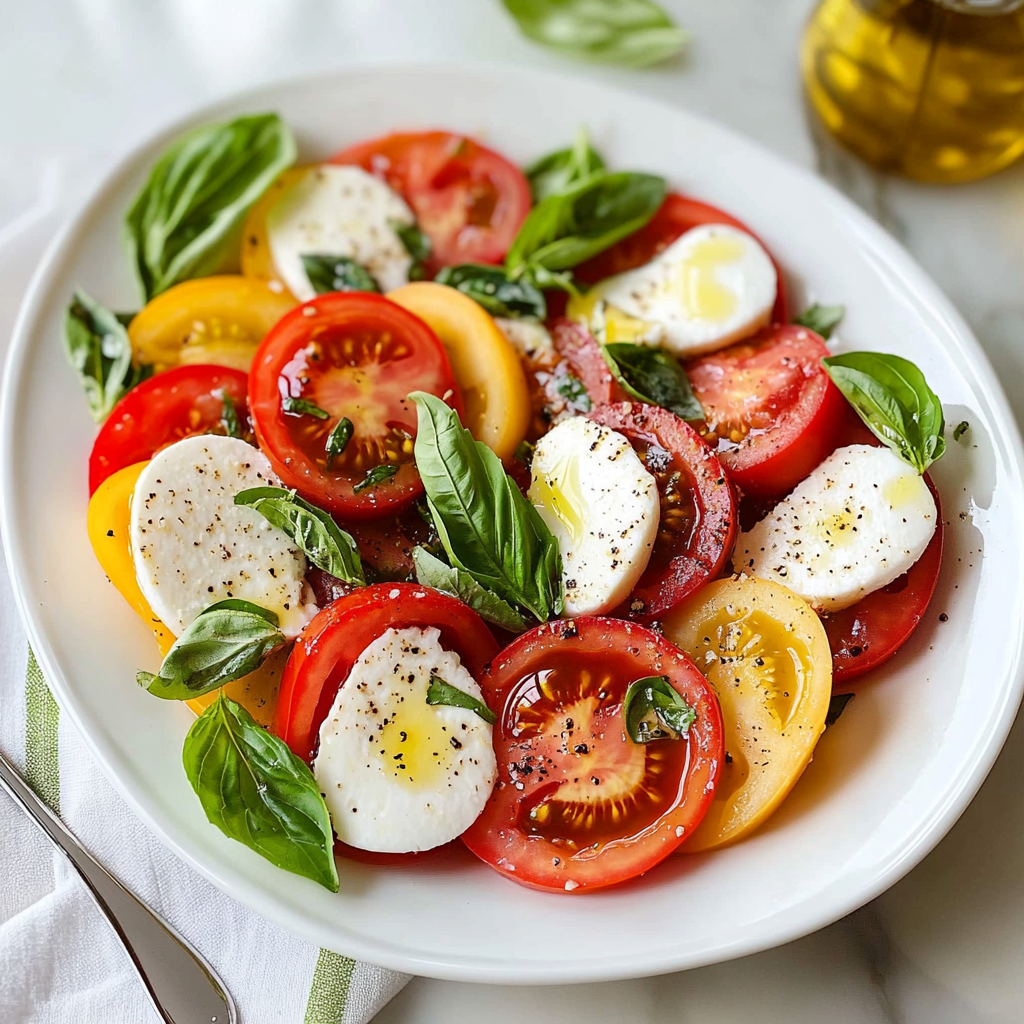
Caprese Salad Recipe for Fresh and Flavorful Italian Dining
Ingredients
Method
- Pat tomatoes and mozzarella dry with paper towels.
- Thinly slice tomatoes and mozzarella evenly.
- Arrange slices on a platter alternating between tomatoes and mozzarella.
- Tuck basil leaves between slices.
- Drizzle olive oil over the salad.
- Sprinkle salt and pepper to taste.
Nutrition
Notes
Uniform slicing ensures even distribution of ingredients and seasoning.
Let ingredients sit at room temperature for 30 minutes before assembling for best taste.
Presentation tip: Alternate slices in a spiral or concentric circle pattern for visual appeal.