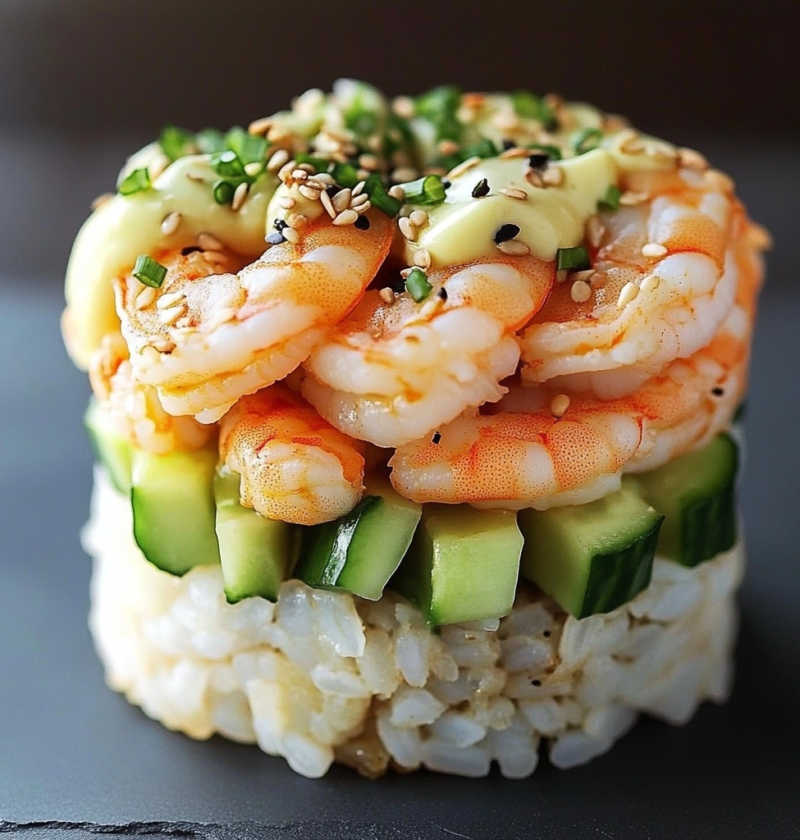
Shrimp Sushi Stacks represent a modern twist on traditional sushi that prioritizes convenience without sacrificing authentic flavor. These layered appetizers combine the texture of fresh shrimp with creamy avocado and crunchy vegetables for a delightful culinary experience. They serve as the perfect solution for those seeking a light meal or an elegant party dish that comes together in minutes. The assembly method requires minimal skill while delivering impressive visual appeal and taste satisfaction.
Why This Recipe Works
This recipe succeeds because it reimagines the complexity of sushi into a manageable format suitable for home kitchens. Traditional rolled sushi requires specialized mats and technique, whereas stacking eliminates the need for skill while maintaining fresh flavors. The combination of brown rice adds a nuttier foundation compared to white rice, offering a more nutritious alternative that fits into a healthy lifestyle.
Furthermore, the layering method ensures that every bite contains a balanced ratio of protein, healthy fats, and carbohydrates. The use of reduced-sodium soy sauce allows for better flavor control without excessive salt content, which is essential for maintaining heart health. The acidity from the rice vinegar brightens the entire composition, making the dish feel refreshing even without heavy dressings.
Convenience is another major factor, as the preparation time is significantly reduced compared to rolling individual pieces. You can assemble multiple servings at once, making it feasible to prepare for a dinner party or family meal without stress. The structure of the stack holds its shape well, allowing for easy transport and serving on a platter without falling apart.
Chef Tips for Perfect Results
Mastering the balance of moisture and texture is the key to creating stable stacks that hold their shape during serving.
- Use perfectly cooked rice: Ensure the short-grain brown rice is tender yet firm to prevent the stack from becoming mushy during handling.
- Cool the rice properly: Allow the vinegar-seasoned rice to reach room temperature before assembling to avoid burning fingers and steaming the vegetables.
- Control shrimp moisture: Pat the cooked shrimp dry with paper towels to prevent excess water from seeping into the stack layers.
- Layer avocado last:Add avocado just before serving to prevent oxidation and browning, maintaining a vibrant green color.
- Use a measuring cup: A standard one-cup measuring cup is the ideal mold size to ensure even distribution and uniform appearance.
- Press gently: Apply light pressure when inverting the stack to maintain the structural integrity without squishing the ingredients.
- Watch the sriracha: Mix the mayonnaise and sauce carefully to distribute the heat evenly without overpowering the subtle flavors of the seafood.
- Chill before serving: Place the plated stacks in the refrigerator for fifteen minutes to help them set and firm up.
Common Mistakes to Avoid
Few errors can compromise the quality of this dish, but awareness of common pitfalls ensures flawless execution from start to finish.
| Mistake | Why It Happens | How to Fix It |
|---|---|---|
| Rice is too sticky | Underestimating the stickiness of cooked grains leads to clumping | Rinse the rice thoroughly before cooking to remove excess starch |
| Stacks fall apart | Ingredients were not compressed enough or rice was too dry | Press the ingredients firmly into the mold before inverting |
| Taste is too salty | Using full-sodium soy sauce without adjusting other flavors | Use reduced-sodium soy sauce and taste before adding more |
| Rice is too hard | Not cooking the brown rice long enough to soften the bran | Allow extra cooking time or add a bit more water to the pot |
| Avo browning | Avocado exposed to air causes oxidation and discoloration | Keep the avocado cut side down or apply lime juice if serving later |
| Furikake clumps | Adding seasoning too early makes it soggy | Apply furikake sprinkles right before plating for crispness |
Variations and Substitutions
The recipe is highly flexible, allowing cooks to adapt ingredients based on dietary restrictions or personal preference while keeping the core structure intact.
| Ingredient or Element | Substitution or Variation | Impact on Flavor or Texture |
|---|---|---|
| Short-grain Brown Rice | Quinoa or Cauliflower Rice | Quinoa adds more protein; cauliflower rice lowers carbs |
| Cooked Shrimp | Canned Tuna or Grilled Chicken | Changes protein source but maintains savory profile |
| Mash Avocado | Sliced Cucumber or Zucchini | Reduces creaminess and lowers calorie count significantly |
| Furikake | Toasted Sesame Seeds | Provides similar nutty flavor without fish flakes |
| Mayonnaise | Greek Yogurt | Reduces fat content while keeping texture creamy |
| Sriracha Sauce | Gochujang or Chili Powder | Adjusts heat level and adds depth to the spice |
| Rice Vinegar | Lemon Juice or Lime Juice | Adds a more citrus-forward acidity profile |
Serving Suggestions and Pairings
Serving these stacks correctly enhances their presentation and ensures a harmonious meal experience for all guests.
- Serve with a side of edamame for a classic Japanese appetizer feel.
- Accompany with miso soup to create a balanced traditional meal.
- Pair with a fresh seaweed salad for added texture and nutrients.
- Offer cucumber slices or carrot sticks alongside for a simple vegetable crunch.
- Serve with ginger chips for a palate-cleansing sweet and spicy option.
- Provide a light green tea or jasmine tea to complement the savory flavors.
- Pair with a crisp white wine or sparkling water with lemon for beverages.
- Offer a side of tempura fries for a heartier fusion appetizer.
- Serve over a bed of shredded lettuce for a low-carb variation.
- Accompany with roasted sweet potato wedges for a hearty component.
- Offer wasabi on the side for those who enjoy traditional sushi condiments.
- Serve alongside a small portion of pickled radishes for acidity.
To create a complete meal, pair these stacks with grilled teriyaki chicken and a steamed broccoli side for a full protein plate. This ensures guests receive enough nourishment while enjoying the unique texture of the stack appetizer. You can also add a fruit salad for dessert to end the meal on a refreshing note.
Make Ahead Options
This recipe is not recommended for full preparation days in advance due to the freshness of the avocado and shrimp. However, you can prepare the components separately up to 24 hours before serving.
Cook the rice and let it cool completely in an airtight container in the refrigerator. The chopped vegetables can also be prepared ahead of time and stored with a damp paper towel to maintain freshness. This method saves significant time when it comes to the actual assembly phase.
It is best to assemble the stacks within an hour of serving to prevent the rice from drying out or the avocado from darkening. Reheating is not necessary as the dish is served cold or at room temperature.
Storage and Reheating
Proper storage is essential to maintaining food safety and quality for leftovers or meal prep.
| Method | Duration | Instructions |
|---|---|---|
| Room Temperature | 2 hours | Do not leave stacked sushi on the counter for more than two hours |
| Refrigerator | 1 day | Wrap tightly in plastic wrap or store in an airtight container |
| Freezer | Do not Freeze | Freezing ruins the texture of the avocado and rice |
| Reheating | N/A | Serve cold or room temperature for best experience |
| Make Ahead | Components only | Store rice and veg separately, assemble shortly before eating |
Always check the freshness of the shrimp before consumption, as seafood spoils faster than other ingredients. If the rice smells sour or the avocado is browned, discard the stack immediately. Food safety is paramount when handling cooked seafood and fresh produce.
Nutritional Information
Approximate values are based on one serving and may vary depending on exact ingredients and portion size.
| Nutrient | Amount per Serving |
|---|---|
| Calories | 250 |
| Protein | 18 grams |
| Fat | 12 grams |
| Saturated Fat | 2 grams |
| Carbohydrates | 25 grams |
| Fiber | 3 grams |
| Sugar | 2 grams |
| Sodium | 500 milligrams |
This meal is naturally high in lean protein which supports muscle repair and overall energy levels. The brown rice provides slower-digesting carbohydrates for sustained release of energy throughout the day.
Frequently Asked Questions
Can I substitute the rice with a different grain?
Yes, you can swap brown rice for quinoa to increase protein intake. Keep in mind that quinoa has a different texture and will require specific cooking adjustments.
How do I know when the sushi is fresh?
Ensure the shrimp smells ocean-like rather than fishy and the avocado looks green not brown. Always use fresh ingredients purchased within the recommended timeframe for best results.
Why do my stacks fall apart when I turn them over?
This usually happens because the rice was not sticky enough or the ingredients were not packed tightly. Press the mixture firmly into the measuring cup to ensure cohesion.
Can I make these stacks without the shrimp?
Absolutely, you can use tofu or simply rely on the vegetables and rice for a vegetarian version. Just ensure you substitute with another protein if desired.
What is the best way to serve the spicy mayo?
You can drizzle the sauce over the stack or serve it on the side for dipping. Dipping allows the diner to control how spicy they want each bite.
How long does the dish last in the fridge?
It remains safe and tasty for up to 24 hours if stored in an airtight container. After that time, the texture of the avocado may start to degrade significantly.
Conclusion
These Shrimp Sushi Stacks offer a delicious, nutritious, and easy-to-prepare meal option for busy evenings. The vibrant layers provide a fun dining experience while keeping the preparation straightforward for home cooks. Embrace the convenience of this modern twist and enjoy the fresh flavors of this satisfying stack.
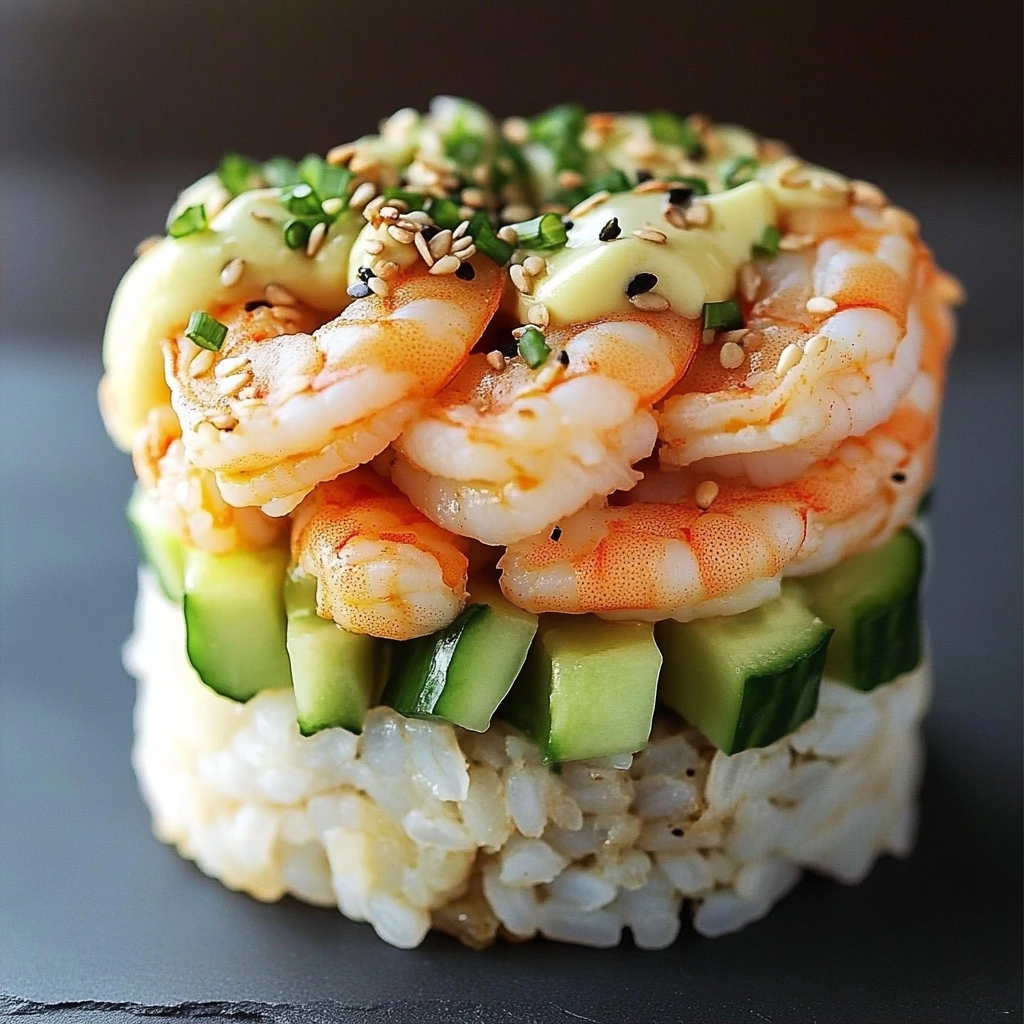
Shrimp Sushi Stacks
Ingredients
Method
- Rinse the brown rice thoroughly and cook according to package instructions until tender.
- In a small bowl, mix soy sauce, rice vinegar, and sugar until sugar dissolves; stir into warm rice and set aside to cool to room temperature.
- Pat cooked shrimp dry with paper towels and set aside.
- Layer julienned bell pepper and cucumber at the bottom of a 1-cup measuring cup.
- Add a layer of rice on top, pressing gently to compact.
- Place 4 shrimp evenly on the rice layer to cover the surface.
- Top with more rice and press gently, leaving space for avocado.
- Add avocado slices just before serving to prevent browning.
- Sprinkle with green onions and sesame seeds.
- Gently turn the cup out onto a plate to form a stack.
- Repeat with remaining ingredients to make additional stacks.
- Serve with sriracha and lime wedges on the side.
Nutrition
Notes
Use a 1-cup measuring cup for uniform size and stability.
Serve immediately or refrigerate for up to 1 hour before serving to enhance flavor.
For a vegan option, substitute shrimp with marinated tofu or avocado slices as the protein layer.